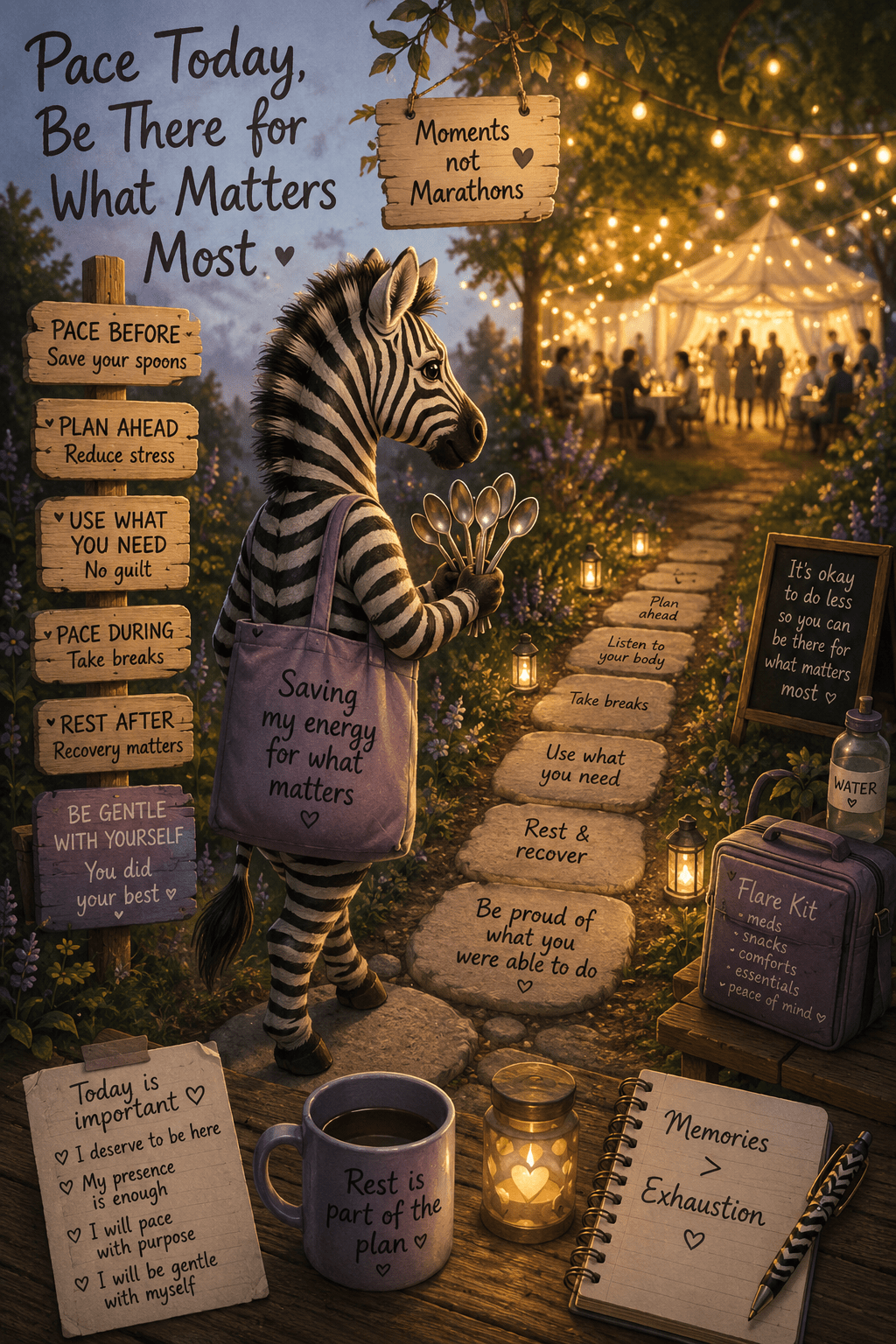
Living with a chronic illness often means becoming an expert in making impossible choices.
Every invitation, appointment, celebration, concert, family gathering, or wedding comes with a silent question:
“Will my body let me be there?”
When your energy is limited and your symptoms are unpredictable, attending an important event isn’t just about showing up. It takes planning, preparation, flexibility, and often days of recovery afterward.
Over the years, I’ve learned that pacing isn’t about giving up the things you love. It’s about giving yourself the best possible chance to experience them.
Here are some strategies that have helped me.
Start Pacing Before the Event
One of the biggest mistakes many of us make is waiting until the day of the event to conserve energy.
Instead, think of your energy like a savings account.
If you know something important is coming, begin “saving spoons” several days beforehand whenever possible.
This might look like:
- Rescheduling non-essential appointments.
- Ordering groceries instead of shopping.
- Simplifying meals.
- Saying no to extra commitments.
- Letting housework wait.
- Asking for help with errands.
Every little bit of energy you save beforehand is energy you may be able to spend on the moment that matters.
Prioritize Rest Without Feeling Guilty
Rest is preparation.
It’s tempting to use a rare good day to catch up on everything you’ve fallen behind on.
But if an important event is approaching, those extra chores may cost you the very experience you’re hoping to enjoy.
Rest isn’t laziness.
It’s part of your treatment plan.
Plan the Logistics
Reducing physical and mental stress can make a huge difference.
Think ahead about questions like:
- Can someone else drive?
- Is accessible parking available?
- Will there be seating?
- Can you bring mobility aids if you use them?
- Are there quiet places where you can take breaks?
- How long do you realistically want to stay?
Having a plan allows you to spend less energy solving problems in the moment.
Pack a “Flare Kit”
Having supplies with you can make the difference between staying comfortably and needing to leave early.
Your kit might include:
- Medications
- Water and electrolytes
- Protein snacks
- Pain relief items
- Braces or supports
- Cooling or heating products
- Noise-canceling headphones
- Sunglasses
- A phone charger
- Anything else that helps you manage your symptoms
You know your body best. Pack accordingly.
Don’t Save All Your Energy for Looking Well
Many of us feel pressure to appear healthy once we finally make it to an event.
We push ourselves to smile through pain, stand longer than we should, or avoid using mobility aids because we don’t want to draw attention.
But using your energy to look okay often leaves less energy to actually enjoy being there.
Use the wheelchair.
Bring the cane.
Sit down.
Take breaks.
Your comfort matters more than appearances.
Give Yourself Permission to Pace During the Event
Pacing doesn’t stop once you arrive.
Take breaks before you desperately need them.
Sit whenever you can.
Stay hydrated.
Eat regularly.
Step outside if you’re becoming overstimulated.
Remember that leaving early doesn’t erase the joy of having been there.
Doing 70% of the event is far better than missing it entirely because you pushed yourself to 100%.
Build Recovery Time Into Your Schedule
Recovery isn’t an afterthought.
It’s part of the event.
If possible, avoid scheduling appointments or obligations for the next day or two.
Plan easy meals.
Prepare your favorite comfort items ahead of time.
Give yourself permission to spend time in bed without criticizing yourself.
Recovery is the price many of us pay for making precious memories.
Be Flexible With Your Expectations
Sometimes our bodies change the plan despite all our preparation.
You may need to arrive late.
Leave early.
Sit through the entire event.
Miss parts of it.
Or even cancel at the last minute.
None of those outcomes mean you failed.
You adapted to circumstances you didn’t choose.
There is strength in flexibility.
Celebrate What You Were Able to Do
It’s easy to focus on what chronic illness took away.
Instead, try asking yourself:
- What moments brought me joy today?
- Who did I get to see?
- What memory did I make?
- What am I proud of?
Those moments matter.
Even if they were shorter than you hoped.
Even if they came with pain.
They still count.
A Gentle Reminder
The world often measures success by how much we accomplish.
But chronic illness teaches us a different definition.
Sometimes success is making it through the front door.
Sometimes it’s staying for twenty minutes.
Sometimes it’s dancing for one song.
Sometimes it’s simply showing up.
And sometimes, despite all your planning, success is recognizing that your body needs you to stay home.
Neither choice makes you weak.
Both require courage.
So if there’s an event that means the world to you, remember this:
Pace before it.
Pace during it.
Rest after it.
Give yourself grace throughout it.
The goal isn’t to do everything.
The goal is to spend your limited energy on the moments—and the people—that matter most.


Leave a Reply